Best Guard Dog Breeds: Top Choices Ranked
Updated: Oct 22

A great guard dog is not the one with the loudest bark or the most intimidating stare. It is the dog that stays calm when nothing is wrong, reads a situation faster than you do, and knows the difference between the mail carrier and a real threat. After years of training protection dogs for families across the United States, I can tell you that this judgment comes from three things working together: the right breed, sound temperament, and serious training.
This guide ranks the best guard dogs we trust for family protection, explains what actually separates a guardian from a nuisance barker, and helps you match a breed to your home and your family. If you have young children, you will find straight answers here about which breeds you can actually trust at home.
What Makes a Great Guard Dog

The American Kennel Club puts it plainly: "Guardian breeds tend to be loyal, fearless, strong and watchful." That is the foundation, but it is only half the story. A dog can be born with protective instinct and still be a liability without structure.
Four traits matter most:
Stable temperament. A good guard dog is confident, not nervous. Fear-based aggression is the opposite of protection. It is unpredictable and dangerous, especially around children.
Trainability. The breed has to take direction under pressure. Intelligence without willingness to work is not enough.
A clear off switch. The best guardians are relaxed at home and alert only when something warrants it. A dog that reacts to everything protects nothing.
Bonded loyalty. Guardian breeds attach deeply to their people. That bond is what drives a dog to place itself between your family and danger.
The AKC is equally direct about the catch: "These breeds need proper training and socialization due to their strength and size." A powerful dog that has not been properly socialized is a problem waiting to happen. This is why professional training separates a real family guardian from a large dog that simply looks the part.
Guard Dog, Watchdog, or Protection Dog: Know the Difference

People use these terms interchangeably, but a watchdog, a guard dog, and a protection dog are three different things, and the difference decides what breed you should choose.
A watchdog alerts. Its job is to bark and let you know someone is there. Many small breeds do this beautifully and never need to be more than an alarm system. A guard dog alerts and deters. Its size, presence, and territorial instinct convince most intruders to leave before anything happens. A protection dog is a trained guard dog that will physically intervene on command and, when necessary, on its own read of a genuine threat.
Most families do not need a bite-trained protection dog. They need a stable guardian breed that deters trouble and is safe to live with. That is the sweet spot this guide focuses on.
The Best Guard Dog Breeds, Ranked
These are the protective dog breeds that consistently earn their place as family guardians. Every one of them needs training and socialization to be safe and reliable.
1. German Shepherd
The German Shepherd is the standard against which every other guard dog is measured, and for good reason. It combines intelligence, drive, and a natural protective instinct with a temperament stable enough to live alongside children. The AKC ranks it the fourth most popular breed in America, and it is among the most widely used breeds in police and military work worldwide.
What sets the German Shepherd apart is balance. It is courageous enough to confront a threat and gentle enough to be trusted with a toddler, provided it is well bred and properly trained. This combination is exactly why a professionally trained German Shepherd remains our first recommendation for families who want real protection without a hair-trigger dog.
2. Rottweiler

The American Kennel Club describes the Rottweiler as "a gentle playmate and protector within the family circle," a dog that "observes the outside world with a self-assured aloofness." Few breeds deter an intruder more effectively just by standing in a doorway. Ranked the eighth most popular breed in the country, the Rottweiler is powerful and confident, reserved with strangers and affectionate at home.
That power demands respect. A Rottweiler needs an owner who provides early socialization and consistent leadership. In the right hands it is one of the most loyal and protective dogs you can own. In the wrong ones it is too much dog.
3. Doberman Pinscher
The Doberman was bred in the 1890s specifically for personal protection, and it still excels at the job. Sleek, fast, and highly intelligent, it patrols a property tirelessly and bonds intensely with its family. Dobermans are often sweeter and more sensitive than their reputation suggests, which makes them excellent companions as well as deterrents.
Their short coat also makes them one of the lower-maintenance guardian breeds, a practical point for busy households.
4. Belgian Malinois
If the German Shepherd is the family guardian, the Belgian Malinois is the elite athlete. It is the breed most militaries and police forces reach for when the work is demanding, thanks to extraordinary drive and focus.
That same intensity makes the Malinois a poor fit for most homes. It needs a job, hours of daily exercise, and experienced handling. An active owner who understands working dogs will get an unmatched partner. Most families are better served by a German Shepherd's bigger off switch.
5. Bullmastiff

Bred to catch poachers without mauling them, the Bullmastiff is a gentle giant with a serious guarding instinct. It is quiet, confident, and rarely aggressive without cause, which makes it surprisingly well suited to family life. Its sheer size, often over 100 pounds, is deterrent enough that it seldom needs to do more than exist.
Bullmastiffs are calm indoors and affectionate with their families. They need firm early training simply because a dog this large has to have good manners.
6. Boxer
The Boxer earns its spot through temperament. It is protective and alert, but it is also patient and playful enough with children to have earned a long-standing reputation as a family dog. A Boxer will guard its home instinctively and then flop down to play the moment the threat passes.
For families who want a medium-sized guardian with boundless affection and a naturally people-friendly nature, the Boxer is hard to beat.
7. Giant Schnauzer
The Giant Schnauzer is one of the most underrated guardians on this list. Bold, territorial, and highly trainable, it works in police and military roles across Europe. Its dense, low-shedding coat also makes it one of the few larger guard breeds often described as suitable for allergy-conscious households, though no dog is truly hypoallergenic.
This is a high-energy, intelligent breed that thrives on training and needs an owner ready to give it both.
8. Cane Corso
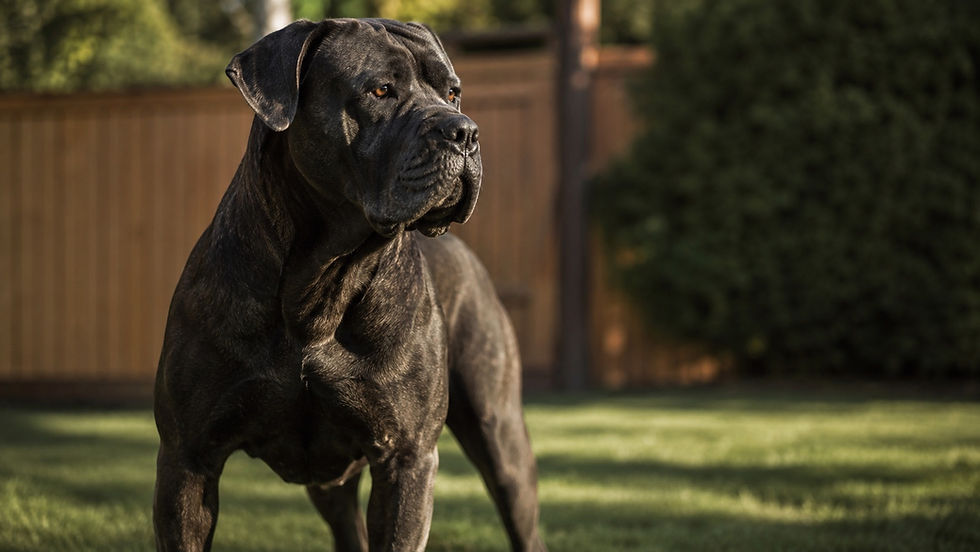
An imposing Italian mastiff, the Cane Corso is a natural property guardian with deep loyalty to its family. It is intelligent and responsive to training, but its size and dominance mean it belongs with an experienced owner who can provide steady leadership from puppyhood.
Well raised, the Cane Corso is a calm, devoted family protector, but this is not a first dog. It needs an owner who has handled a strong breed before.
9. Akita
Dignified and famously loyal, the Akita is a quiet guardian that bonds tightly to one family and remains aloof with strangers. It does not bark needlessly. When an Akita reacts, there is usually a reason.
Its independent streak means it needs early socialization and an owner who understands more headstrong breeds, but few dogs are more devoted.
Best Guard Dogs for Different Homes

Not every family needs a 100-pound guardian. Different types of guard dogs suit different homes, and the right one depends on your space, your activity level, and your priorities.
Big guard dogs. Bullmastiffs, Cane Corsos, and Great Danes deter through sheer presence and suit homes with room to spare.
Medium-sized guard dogs. German Shepherds, Dobermans, and Boxers hit the sweet spot: protective, manageable, and adaptable to most households.
Small guard dogs. No small dog will physically stop an intruder, but breeds like the Miniature Schnauzer are alert, vocal watchdogs that make an effective early-warning system.
Low-maintenance guard dogs. Short-coated breeds such as the Doberman and Boxer need far less grooming than heavy-coated guardians, a real advantage for busy families.
Allergy-conscious households. Low-shedding breeds like the Giant Schnauzer or Standard Schnauzer are the closest thing to a hypoallergenic guard dog, though sensitive owners should always spend time with a breed first.
Are Guard Dogs Safe Around Children?

This is the question I hear most from parents, and it deserves an honest answer. Yes, guardian breeds can be exceptional family dogs. The German Shepherd, Boxer, and Bullmastiff in particular are known for their patience with children. But safety is never automatic.
A guard dog is safe around children when it is well bred, properly socialized, and trained to be calm and obedient. It becomes a risk when it is poorly bred, left unsocialized, or bought as a status symbol and never taught to handle the everyday chaos of family life. Temperament is decided long before a puppy comes home, which is why the source of your dog matters as much as the breed on paper.
Supervision is still essential with any dog and any child. A well-raised, properly trained family protection dog, though, is one of the safest and most devoted companions a family can have.
Do Guard Dogs Need Professional Training?

Protective instinct is not the same as protective skill. A dog can want to guard your family and still make every wrong decision under stress. That gap is exactly what training closes.
There is also a distinction that matters. Sport and obedience training builds a dog that performs on cue. Real protection training builds a dog that reads a genuine, unpredictable situation, acts, and stands down the instant it is told to. The two are not the same, and for a family dog, the ability to stop on command is every bit as important as the ability to act.
For most families, professional guard dog training is the safest path to real protection. A fully trained family guard dog removes the guesswork, and the years of specialized work that go into it are already done.
How to Choose the Right Guard Dog for Your Family
Start with your household, not the breed. Ask three questions. How much space and exercise can you genuinely provide? How much dog experience do you have? And what do you actually need: an alarm, a deterrent, or trained intervention?
A first-time owner with young children is better served by a stable, well-trained German Shepherd than by a high-drive Malinois or a dominant Cane Corso. An experienced handler with time and space has more room to choose. Whatever the breed, prioritize temperament and a responsible source over looks. The most protective dog in the world is worthless to your family if it cannot be trusted at home.
FAQ
What is the best guard dog for a family?
The German Shepherd is our top choice for most families. It offers a rare balance of protective instinct, trainability, and a temperament stable enough to live safely with children, especially when it is well bred and professionally trained.
What is the most protective dog breed?
German Shepherds, Rottweilers, and Doberman Pinschers are consistently ranked among the most protective breeds. All three combine strong guarding instinct with the intelligence to be trained reliably.
Are guard dogs safe with children?
They can be, and many guardian breeds are wonderful with kids. Safety depends on breeding, early socialization, and training rather than on the breed alone. Always supervise interactions between any dog and young children.
What is the best guard dog for first-time owners?
A first-time owner should choose a breed that is protective but forgiving to train. A well-bred, professionally trained German Shepherd or Boxer is far more manageable than a high-drive working breed like the Belgian Malinois.
Do guard dogs need special training?
Yes. Even breeds with natural protective instinct need obedience and socialization to be safe, and real protection work requires professional training that teaches a dog to act and, just as importantly, to stand down on command.
Are small dogs good guard dogs?
Small breeds make excellent watchdogs. They are alert and vocal, so they warn you of trouble, but they cannot physically deter or stop an intruder the way a large guardian breed can.
Protect Your Family With a Dog You Can Actually Trust
The best guard dog for your family is the one whose breed, temperament, and training all point in the same direction. Get one of those wrong and you have a big dog. Get all three right and you have a guardian that helps protect your family and behaves like a beloved pet the rest of the time.
That combination is what we build. Every dog we place is a professionally trained European German Shepherd, selected for temperament and raised with the family's safety as the first priority. You can see the dogs ready for placement now on our available dogs page. If you would like to talk through what that looks like for your home, explore our protection dog tiers and services or reach out directly. We will help you find the right guardian for your family.
Sources
American Kennel Club. Best Guard Dogs. Accessed 2026.
American Kennel Club. Most Popular Dog Breeds of 2024. 2025.
American Kennel Club. German Shepherd Dog Breed Information. Accessed 2026.
American Kennel Club. Rottweiler Dog Breed Information. Accessed 2026.
American Kennel Club. Doberman Pinscher Dog Breed Information. Accessed 2026.


Comments